Stop Logs & Flood Planks for Reliable Flood Protection

Engineered removable flood barrier systems designed to protect openings, entrances, and critical infrastructure from water intrusion.

Schedule a Consultation

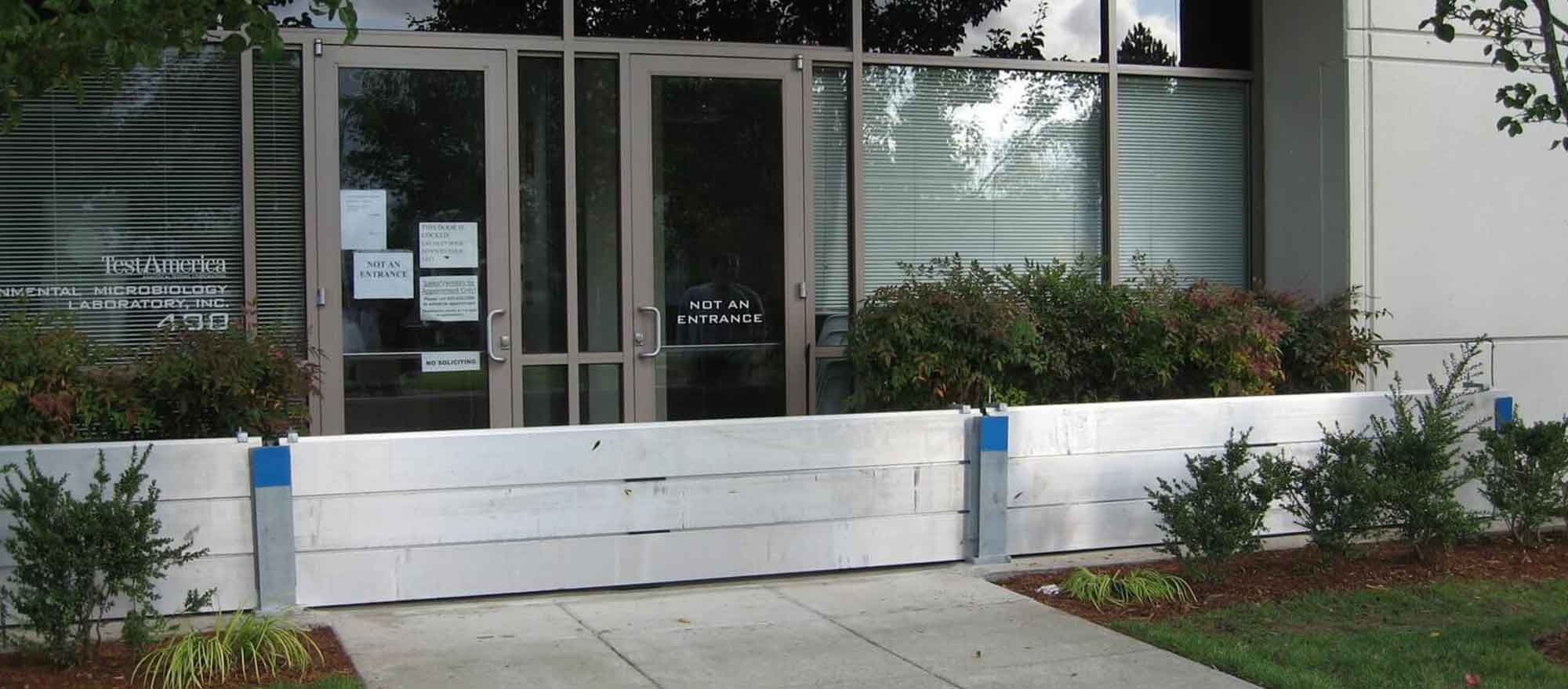
Stop logs are stackable flood barrier panels that block water at vulnerable openings like doorways, loading docks, tunnels, and infrastructure access points. They're also commonly called flood planks or stop gates, depending on the manufacturer or region.

For commercial, municipal, and industrial facilities, stop logs offer one of the most practical ways to keep floodwater out without permanently altering a building's appearance or access. Flood Control America has spent more than 27 years engineering and manufacturing these systems in the U.S., partnering with facility owners and experts in hydraulic engineering who need flood protection that performs when it matters most.

What Are Stop Logs?

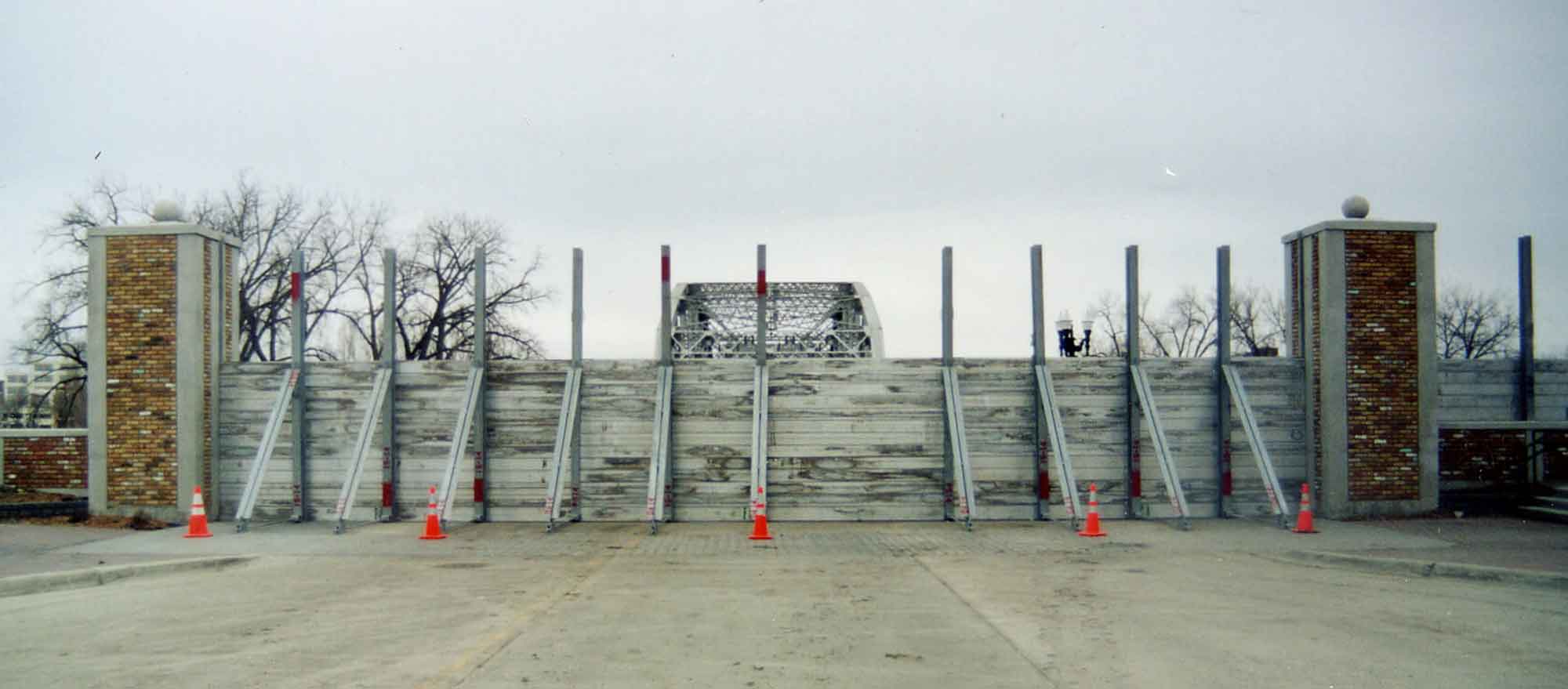
A stop log system consists of horizontal panels that stack between vertical posts or channels to create a watertight barrier across an opening. During construction, the panels slide into place one by one, building the barrier from the ground up to the required height or anticipated water level. Most systems use extruded aluminum, stainless steel, or other engineered materials that keep the panels strong enough to hold back significant water pressure while staying light enough for a small crew to handle. This design ensures easy handling during deployment.

Stop logs are what's known as a dry floodproofing solution, meaning they keep water out rather than managing it after it gets in. Compared to sandbags, which are labor-intensive and single-use, stop logs offer a reusable, tested alternative with an exceptionally low leakage rate that goes up in a fraction of the time. Permanent flood walls work in some situations, but they're inflexible, expensive, and change the look of your facility year-round. Stop logs give you engineered protection without locking you into a permanent structure.

Where Stop Logs Are Used

Stop logs protect openings across a wide range of facilities and infrastructure types:

  • Commercial buildings, including doors, garages, and storefronts
  • Industrial facilities and warehouses
  • Municipal infrastructure like pump stations, tunnels, and electrical substations, as well as facilities for water and wastewater treatment
  • Transportation hubs, including airports and rail systems
  • Data centers, power stations, and other critical infrastructure
  • Open channels, irrigation systems, and areas requiring water level control and water level regulation

In every case, the goal is the same. Keep water out, protect assets, and maintain operational continuity so your facility can get back to normal as quickly as possible after the event passes.

Key Benefits of Stop Logs & Flood Planks

  • Rapid deployment: Panels install quickly before flood events, with no heavy equipment required, though hydraulic stoplog lifters and other lifting equipment can be utilized for larger installations.
  • Reusable system: Unlike sandbags, stop logs are designed for repeated use across multiple flood events, making them far more cost-effective over time.
  • Engineered protection: Each system is designed to handle specific flood levels and hydrostatic pressures, not just hold water back and hope for the best.
  • Minimal visual impact: Panels store out of sight when not in use. The side channels stay in place but are designed to blend into the structure.
  • Custom fit: Every system is custom-designed and tailored to the exact dimensions and conditions of the opening it protects.
  • Durable, corrosion-resistant materials: Built to perform reliably after an event, even in harsh or coastal environments, requiring very low maintenance.
  • Reduced downtime and damage costs: Keeping water out of a facility means avoiding the expensive disruption that follows a flood, from equipment damage to lost production to lengthy cleanups.

Key Benefits of Stop Logs & Flood Planks

Flood Control America engineers stop log and flood plank systems to match the specific needs of each site. That starts with the opening dimensions and flood risk profile, but also factors in how the system integrates with the building's structure and any broader flood protection strategy you already have in place. These function seamlessly as effective water flow control systems when unpredictable water flows threaten a property.

For facilities using our Invisible Flood Control Wall (IFCW™) systems, stop logs can be incorporated as part of a larger perimeter defense. Every system is custom-engineered to fit the site, compatible with a range of opening sizes, and designed to align with FEMA and USACE-informed standards where appropriate.

How Stop Logs Work

Stop logs protect openings across a wide range of facilities and infrastructure types:

  • Commercial buildings, including doors, garages, and storefronts
  • Industrial facilities and warehouses
  • Municipal infrastructure like pump stations, tunnels, and electrical substations, as well as facilities for water and wastewater treatment
  • Transportation hubs, including airports and rail systems
  • Data centers, power stations, and other critical infrastructure
  • Open channels, irrigation systems, and areas requiring water level control and water level regulation

In every case, the goal is the same. Keep water out, protect assets, and maintain operational continuity so your facility can get back to normal as quickly as possible after the event passes.

Why Choose Stop Logs Over Traditional Methods

Sandbags are still the default for a lot of facilities, but they fall short in almost every way that matters when you compare them to an engineered stop log system.

  • Engineered and tested vs. temporary and inconsistent. Stop logs are designed to hold back specific flood levels and hydrostatic pressures.
  • Sandbags rely on proper stacking technique and degrade quickly once they’re wet.
  • Fast installation vs. heavy labor. A small team can deploy a stop log system in minutes per opening. Filling, hauling, and stacking enough sandbags to protect even a single opening takes significantly more people and time.
  • Fully reusable vs. single-use. Stop logs deploy and store repeatedly for years. Sandbags get used once and have to be disposed of after every event.
  • Professional appearance vs. messy and disruptive. Stop logs store out of sight and look clean when deployed. Sandbags leave sand, debris, and saturated bags that need to be cleaned up.
  • One investment vs. recurring costs. When you factor in the labor, materials, and disposal costs that come with every sandbag deployment, stop logs pay for themselves quickly.

Why Choose Flood Control America

Flood Control America has been designing and manufacturing removable flood barrier systems for more than 27 years. We were among the first in the U.S. to develop demountable flood wall technology, and we've been refining these systems ever since.
  • 100% U.S.-made materials and manufacturing
  • Proud partnership with the Association of State Floodplain Managers (ASFPM)
  • Systems aligned with FEMA and NFIP guidelines
  • An experienced engineering team with deep expertise in civil and infrastructure applications
  • Proven installations protecting facilities across the country
Schedule a Consultation

Project Spotlights

T-Mobile (Pacific Northwest)

A hybrid office/communications site prone to chronic flooding was protected with a perimeter solution using bulkhead channels and 10-foot planks. The solution provides quick closures in tight spaces without disrupting daily operations.

View Project

East Grand Forks, MN (Downtown riverfront)

Removable street and rail closures plus an architectural half wall protect the commercial district. Openings stay usable until just before the water is predicted to rise, and then crews can complete the line of defense.

View Project

University of Iowa (Art Building West)

After severe flooding, FCA engineered a removable perimeter wall with custom 90-degree corner posts. The system protects the facility during flood events while maintaining normal access the rest of the year. Additional removable walls now protect other campus locations.

View Projects

140 West, New York, NY

An urban infrastructure project with compact, demountable protection appropriate for dense environments where permanent obstructions aren't feasible.

View Projects

When your goal is complete, civil-grade protection without daily operational disruption, Flood Control America's removable flood wall systems deliver incredible performance. Explore more examples on our projects page or contact us to engineer the right solution for your site.

FAQs

What are stop logs and how do they work?

Stop logs are horizontal barrier panels that stack between permanently installed side channels to block water at building openings. Compression seals between panels create a watertight barrier.

Are stop logs the same as flood planks?

Yes. “Stop logs” and “flood planks” refer to the same type of system. The terminology varies by manufacturer and region.

How quickly can stop logs be installed before a flood?

Most systems can be deployed in minutes by a small team. The exact time depends on the size and number of openings being protected.

Are stop log systems reusable?

Yes. Stop logs are designed for repeated deployment over many years, making them far more cost-effective than single-use alternatives like sandbags.

Are these systems compliant with FEMA or NFIP guidelines?

Flood Control America designs its systems with FEMA and USACE-informed standards in mind. We can work with you and your floodplain manager to make sure your installation aligns with applicable requirements.

What types of openings can be protected?

Stop logs can be configured for doorways, loading docks, garage entrances, tunnels, utility access points, and virtually any opening where water intrusion is a risk.

How do I know if stop logs are right for my facility?

The best starting point is a site consultation. We’ll assess your openings, review flood risk data, and recommend the right system for your needs.

What maintenance is required?

Minimal. Periodic inspection of seals, channels, and panels is recommended, along with proper cleaning and dry storage after each deployment, which helps avoid extensive maintenance and repair works.

Get Free Consultation

See Our Story