
Temporary flood barriers are essential for modern flood risk mitigation.
Businesses, municipalities, and critical infrastructure owners face increasing threats from river flooding, coastal surges, and intense rainfall. Deployable flood barriers provide rapid, reliable protection where permanent flood walls are impractical or cost-prohibitive. Flood Control America leads the industry with American-made, removable flood wall barriers engineered for demanding conditions and rigorous standards. With over 27 years of experience and hundreds of successful installations, Flood Control America delivers trusted, field-proven flood protection systems accepted by the U.S. Army Corps of Engineers.
What Are Temporary Flood Barriers? Definitions, Types, and Use Cases
Temporary flood barriers are removable or deployable structures designed to hold back floodwaters during emergencies. Unlike permanent levees or fixed walls, these barriers offer flexibility and rapid deployment for site-specific protection needs. The main types include:
- Demountable flood barriers: Interlocking panels or stop logs installed in prepared channels or frames, often stored offsite until needed
- Modular flood barriers: Pre-engineered sections that fit various lengths and heights, supporting easy transport and storage
- Freestanding flood barriers: Self-supporting units that require little to no permanent foundation, suitable for fast setup on flat surfaces
Organizations use temporary flood wall barriers to protect commercial buildings, warehouses, transit hubs, data centers, and public infrastructure. As climate change intensifies extreme weather, flood prevention planning is becoming more urgent for businesses, municipalities, and critical infrastructure owners. Municipalities and facility managers deploy these systems ahead of hurricanes, river overflows, flash floods, and other storm events in coastal areas and inland corridors. A portable flood barrier can help teams respond quickly when rising water threatens access roads, facilities, and equipment. Temporary flood walls are also widely used in emergency management when fast action is needed to reduce flood damage. Temporary barriers support both planned events and emergency flood response, making them valuable tools for resilience planning and disaster risk reduction.
How Temporary Flood Barriers Work: Design, Deployment, and Modular Flexibility
Temporary flood barriers deliver protection through engineered strength and flexible deployment methods, especially when water rises and threatens a site. Modern systems use robust materials like marine-grade aluminum or steel for structural integrity. Modular flood barriers, such as Flood Control America’s Invisible Flood Control Wall (IFCW), feature lightweight panels or stop logs that lock into place with minimal tools. Each system suits site-specific conditions, allowing for custom heights, lengths, and corner solutions.
Deployment focuses on speed and simplicity for a fast response. Pre-installed anchors or channels allow barriers to be deployed quickly by trained staff or maintenance teams. Freestanding flood barriers serve as a portable flood barrier solution and position without ground penetration for fast setup on flat surfaces, preserving landscaping and hardscapes.
These systems are used for hurricanes, river overflows, flash floods, coastal areas, storm surges, and other sudden flood threats. They help emergency teams limit water intrusion before flooding reaches critical access points. They are also used in seasonal flood zones and historic districts where low visual impact matters.
Flood Control America’s removable flood wall barriers are engineered for long-term reliability with rapid deployment in mind. The stop log systems provide versatile, stackable protection for entryways, loading docks, and perimeter defense. All IFCW components are manufactured in the U.S. for strict quality control and consistent performance. Over 8.6 million Americans live in high-risk coastal flooding areas, reinforcing the need for flood prevention before the next flood.
Key Benefits of Deployable Flood Barriers for Commercial and Institutional Protection
Deployable flood barriers provide a range of advantages for organizations seeking resilient flood defense systems:
Speed of Installation
Temporary barriers deploy by small teams in hours, minimizing disruption to operations and allowing for last-minute flood mitigation
Reliability
Engineered for tested load ratings, these systems deliver consistent performance during real flood events
Cost-Effectiveness
Temporary flood wall barriers avoid the high capital costs of permanent structures and reduce insurance risk
Minimal Disruption
Removable components keep properties accessible and aesthetically unobtrusive when not in use
Scalability
Modular and demountable flood barriers reconfigure, extend, or relocate as risk profiles change
Businesses protect assets without major construction or operational downtime. Municipalities maintain access to roads and critical facilities while ensuring rapid response capability. For multi-site organizations, standardized, portable flood barriers enable consistent protection across diverse locations.
Certifications, Compliance, and Proven Performance: Meeting Industry Standards
Certifications and third-party evaluations are critical when selecting flood protection systems for commercial or government use. Leading deployable flood barriers meet FEMA and ANSI/FM 2510 standards for flood mitigation. Flood Control America’s products are analyzed and accepted by the U.S. Army Corps of Engineers, providing confidence in their performance and reliability.
American-made manufacturing ensures compliance with domestic procurement requirements and supports rigorous quality assurance. Flood Control America’s track record includes installations on high-profile Corps of Engineers projects, critical infrastructure, and private sector sites. Buyers benefit from proven solutions with documented testing and real-world performance data.
View ProjectsIntegrating Temporary Flood Barriers into Broader Flood Resilience Strategies
Temporary flood barriers are most effective when integrated into comprehensive flood resilience plans. Layering deployable flood barriers with permanent defenses, site grading, and drainage improvements creates a robust flood protection system. Emergency preparedness plans should include clear protocols for barrier deployment, maintenance, and storage.
Regular training and drills ensure staff can install barriers quickly under pressure. Maintenance schedules keep components in optimal condition and ready for deployment. Site assessments identify potential vulnerabilities and guide the placement of modular flood barriers for maximum coverage. Combining engineered barriers with other disaster risk reduction measures enhances overall resilience and business continuity.
Project Spotlights
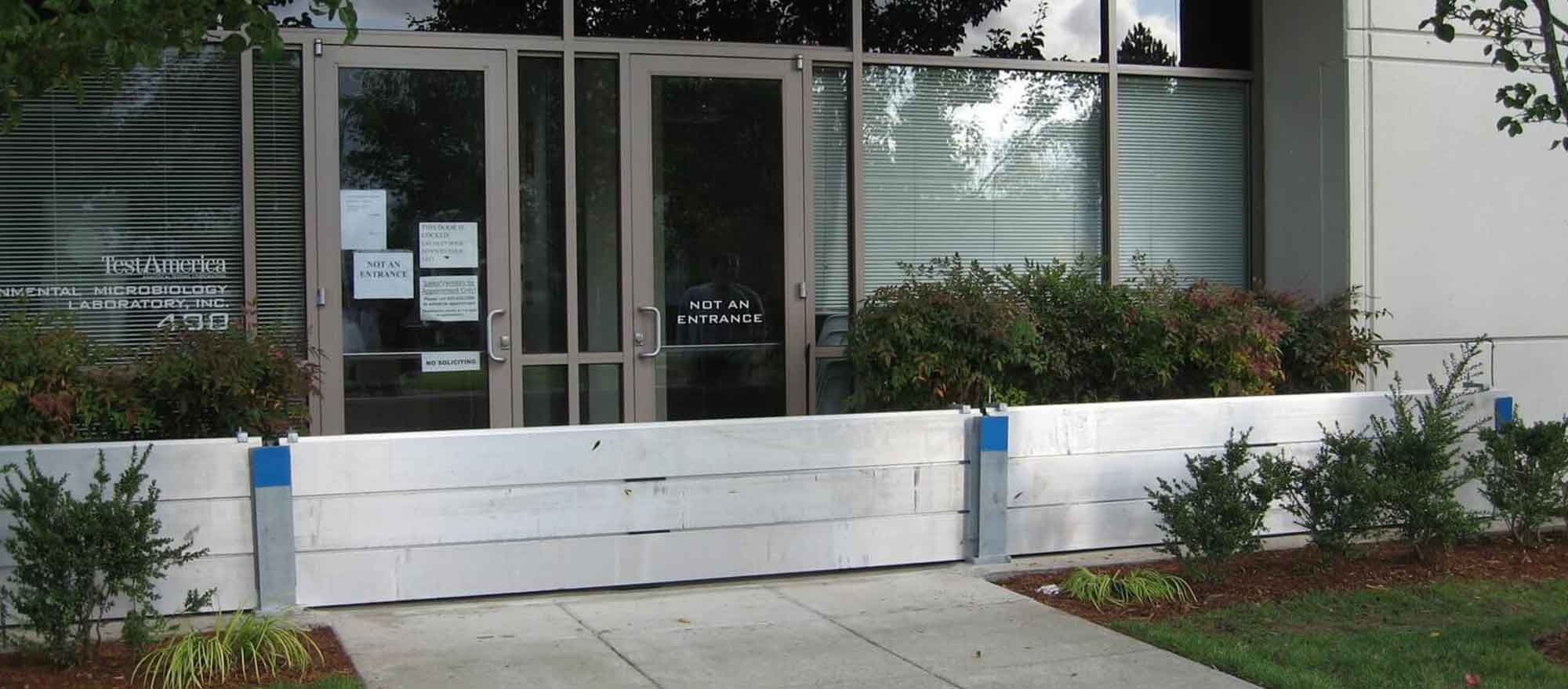
T-Mobile (Pacific Northwest)
A hybrid office/communications site prone to chronic flooding was protected with a perimeter solution using bulkhead channels and 10-foot planks. The solution provides quick closures in tight spaces without disrupting daily operations.
View Project
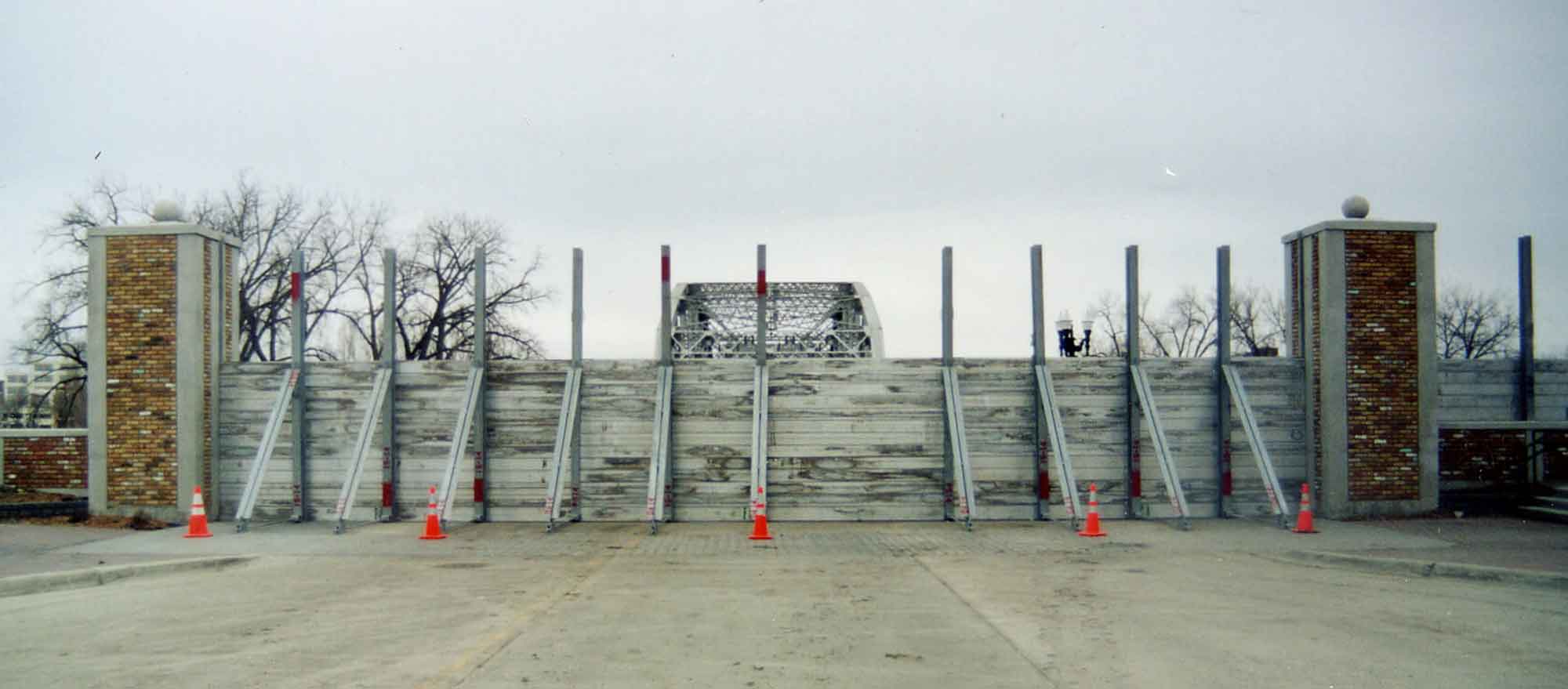
East Grand Forks, MN (Downtown riverfront)
Removable street and rail closures plus an architectural half wall protect the commercial district. Openings stay usable until just before the water is predicted to rise, and then crews can complete the line of defense.
View Project

University of Iowa (Art Building West)
After severe flooding, FCA engineered a removable perimeter wall with custom 90-degree corner posts. The system protects the facility during flood events while maintaining normal access the rest of the year. Additional removable walls now protect other campus locations.
View Projects

140 West, New York, NY
An urban infrastructure project with compact, demountable protection appropriate for dense environments where permanent obstructions aren't feasible.
View Projects
When your goal is complete, civil-grade protection without daily operational disruption, Flood Control America's removable flood wall systems deliver incredible performance. Explore more examples on our projects page or contact us to engineer the right solution for your site.
FAQs
How quickly can temporary flood barriers be deployed?
Most systems install in hours with trained personnel and are most effective when integrated into broader flood prevention and resilience plans that account for rising water levels near rivers, drainage routes, and other water bodies.
What storage solutions exist for removable flood walls?
Flood Control America provides compact, secure storage racks and solutions for compact storage that protect components, save space, and simplify logistics.
How do these barriers compare to sandbags or flood bags?
Temporary flood wall barriers deliver higher reliability, faster deployment, and reusable performance, making them superior alternatives to options that must be filled on site with sand.
Are deployable barriers compatible with irregular site conditions?
Modular and demountable systems are custom-designed for each location, handling slopes, corners, and unique architectural features.
What maintenance is required?
Periodic inspection and cleaning maintain system readiness, and seals, clamps, and joints should be checked regularly. Flood Control America offers maintenance guidance and support to help you plan before the next flood.
Do these barriers meet regulatory requirements?
Flood Control America’s systems meet FEMA, ANSI/FM 2510, and Corps of Engineers standards, supporting regulatory compliance and insurance acceptance.